RAHS Latest News
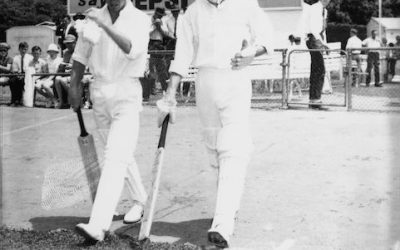
Call for Papers: Public Sport History and Community Sport
Symposium by the Centre for Applied History Tuesday, 5 December 2023, Macquarie University Hybrid face-to-face and online event This symposium will explore intersections between Public Sport History and Community Sport. It provides an opportunity for reflection on scholarship that these topics have generated in recent years and for collaborative discussion about current projects and the state of the field today. For the purposes of the event, we are defining Public Sport History broadly as the...

ICOMOS General Assembly 2023
ICOMOS General Assembly 2023 The International Council on Monuments and Sites (ICOMOS) works for the conservation and protection of cultural heritage places. The members of ICOMOS contribute to improving the preservation of heritage, the standards and the techniques for each type of cultural heritage property: buildings, historic cities, cultural landscapes and archaeological sites. Australia ICOMOS was formed in 1976 as a national committee of ICOMOS and its mission is to lead cultural...

2023 RAHS Conference – Featured Session: Voices from the Past
2023 RAHS Conference: Featured Session Local and Community Histories: Voices from the Past Wagga RSL Club, 21-22 October 2023 Bookings are now open for the 2023 RAHS Conference, with discounted early bird prices available until 15 September. The conference will be held on 21–22 October at the Wagga Wagga RSL Club. In this blog post, we look at how oral histories can provide unique perspectives on the past, with our speakers in Session E discussing how to conduct and use oral histories in your...
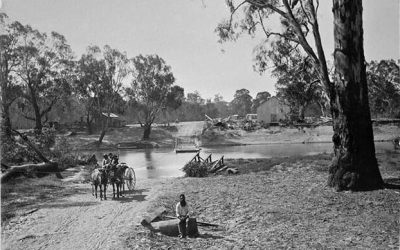
The 2023 Lesley Muir Address
The 2023 Lesley Muir Address Looking for ways ahead: A local response from Albury-Wodonga The 2023 Lesley Muir Address will be presented during the 2023 RAHS Conference at Wagga Wagga by Adjunct Associate Professor Bruce Pennay OAM. Participants at a conference themed The Way Ahead come with hopes of pondering the ways ahead for their work and that of their historical societies. This talk will be a picture-led analysis of how one local history society is feeling its way ahead. It is inspired...
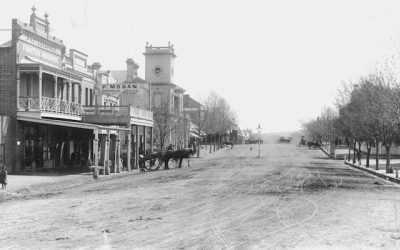
Nominations for the 2023 Certificates of Achievement
Nominations are now open for the 2023 RAHS Certificates of Achievement RAHS Affiliated Societies are crucial in promoting local and community history throughout New South Wales. Has one of your members made an outstanding contribution to your historical society? Why not consider nominating them for the Certificate of Achievement award? The Certificates of Achievement recognise members of societies whose contribution is significant and noteworthy. In 2022, we awarded thirteen Certificates of...
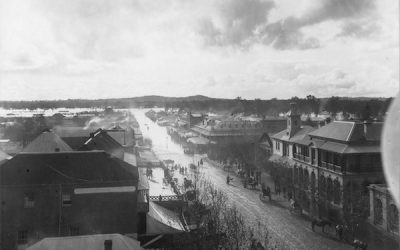
2023 RAHS Conference bookings now open – early bird tickets available until 15 September
2023 RAHS Conference - The Way Ahead: Local and Community Histories for our Future Bookings have now opened for the 2023 RAHS Conference in Wagga Wagga, with early-bird prices available until 15 September. The conference will be held on 21–22 October at Wagga RSL Club. The City of Wagga Wagga is the perfect location to explore the conference theme – The Way Ahead: Local and Community Histories for our Future. Today the people who call Wagga Wagga home reflect its rich and diverse history. The...

Vale: Australian Society for the History of Engineers and Technology (2003–2023)
Written by Mari Metzke (ASHET Secretary) The Australian Society for the History of Engineering and Technology (ASHET) first met as a group on 10 April 2003. Our chosen venue was the Auditorium at History House, as many of the founding members were associated with the RAHS. At that time, I worked at the RAHS dealing with all the needs of about 350 Affiliated Societies scattered around NSW. Initially, I had been approached by retired engineer Ian Arthur, who was at that time an active member of...

Call for Papers: Performing Arts Heritage Network Working Group
Archives, Artists & Absences Kaurna Country, Adelaide 27 November 2023 The Performing Arts Heritage Network (PAHN) will meet and share 20-minute work-in-progress papers focusing on the intersection of history and heritage in any material, format, genre, or level of society. Proposals should also reflect some engagement with the nature of collection(s), in line with the wider ADSA Conference. We also welcome proposals for panel discussions. PAHN invites abstracts of 250 words responding to...
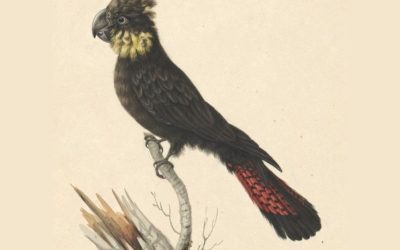
JRAHS Vol 109 Pt. 1 June 2023 – Editorial
Journal of the Royal Australian Historical Society Vol 109 Pt 1 June 2023 Editorial As the RAHS embarks on a new chapter in the history of its Journal, I want to express our appreciation for the incredible work and dedication of the previous editorial team. Adjunct Associate Professor Carol Liston AO edited the Journal from mid-2002 to 2022. Under Carol Liston’s guidance, the Journal has flourished, offering an important platform for historical research and scholarly discourse. For more than...
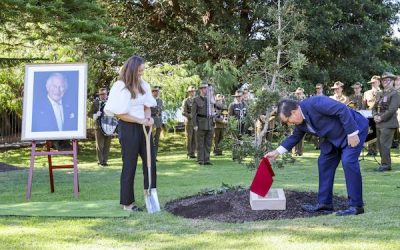
Coronation Ceremonial Tree Planting at NSW Government House
On Saturday 6 May, RAHS President Iain Stuart attended a ceremonial tree planting at Government House to celebrate the coronation of Their Majesties King Charles III and Queen Camilla. The event began with a smoking ceremony by the Koomurri Dancers and included the National Anthem and Royal Anthem played by the Australian Army Band. Short addresses were delivered by His Excellency the Honourable Andrew Bell, Lieutenant-Governor of New South Wales, and Lottie Dalziel, NSW Young Australian of...
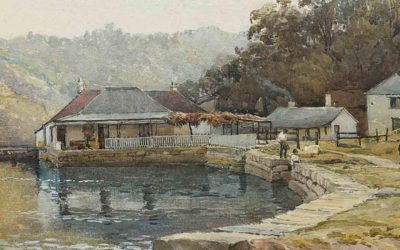
2023 Cultural Grants Media Release
2023 Cultural Grants Program is now open! We are pleased to share that the 2023 Cultural Grants Program is now open! The Cultural Grants Program is a Create NSW devolved funding program administered by the Royal Australian Historical Society on behalf of the NSW Government. This Cultural Grants program assists historical research and publication of local, community and regional history projects. Last year, eighteen projects were recommended for funding to the value of $59,105. Sixty per cent...
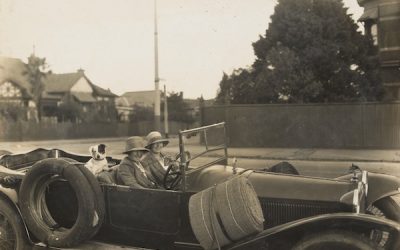
Kathleen Howell (c. 1904–2001) and Jean Robertson (1904–1981)
Written by Jessica Buckton, RAHS Volunteer To celebrate Women’s History Month in 2023, the Royal Australian Historical Society will continue our work from previous years to highlight Australian women that have contributed to our history in various and meaningful ways. You can browse the women featured on our webpage, Women’s History Month. Today, most people have gone on a road trip at some point in their life. Whether it be a small trip, not far from your local area, or a long trip spanning...
RAHS Weekly News Round-Up