Challenging Narratives: Introducing the June 2025 JRAHS

Challenging Narratives: Introducing the June 2025 JRAHS

Challenging Narratives: Introducing the June 2025 Volume of the JRAHS

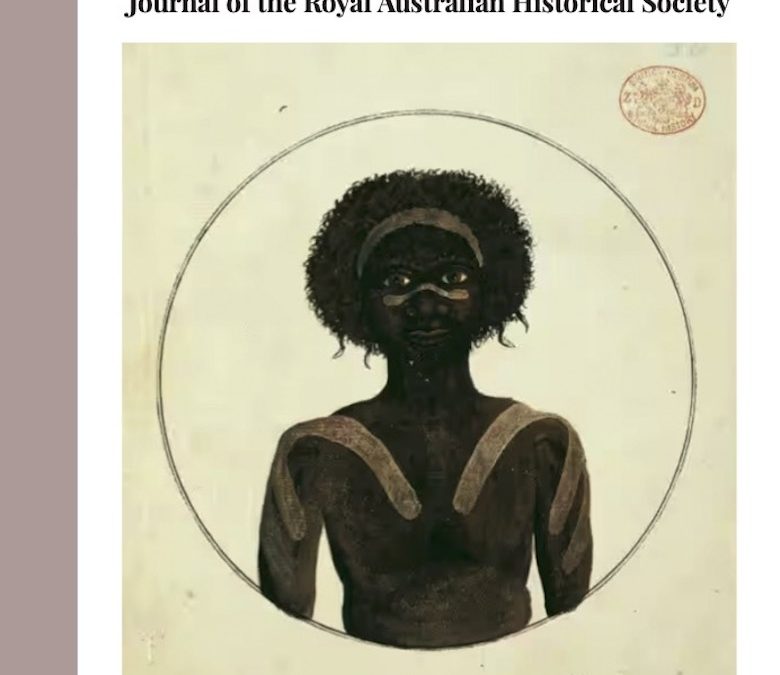
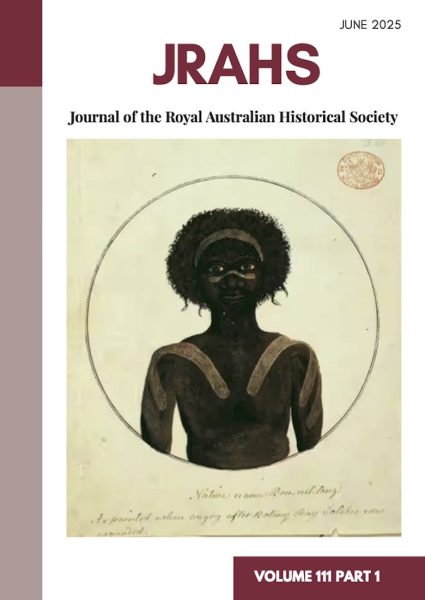
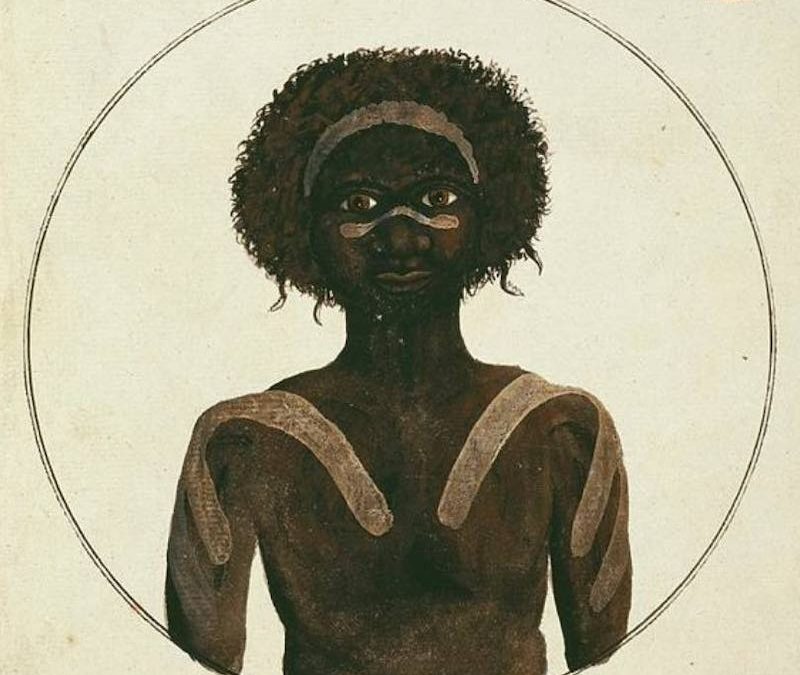
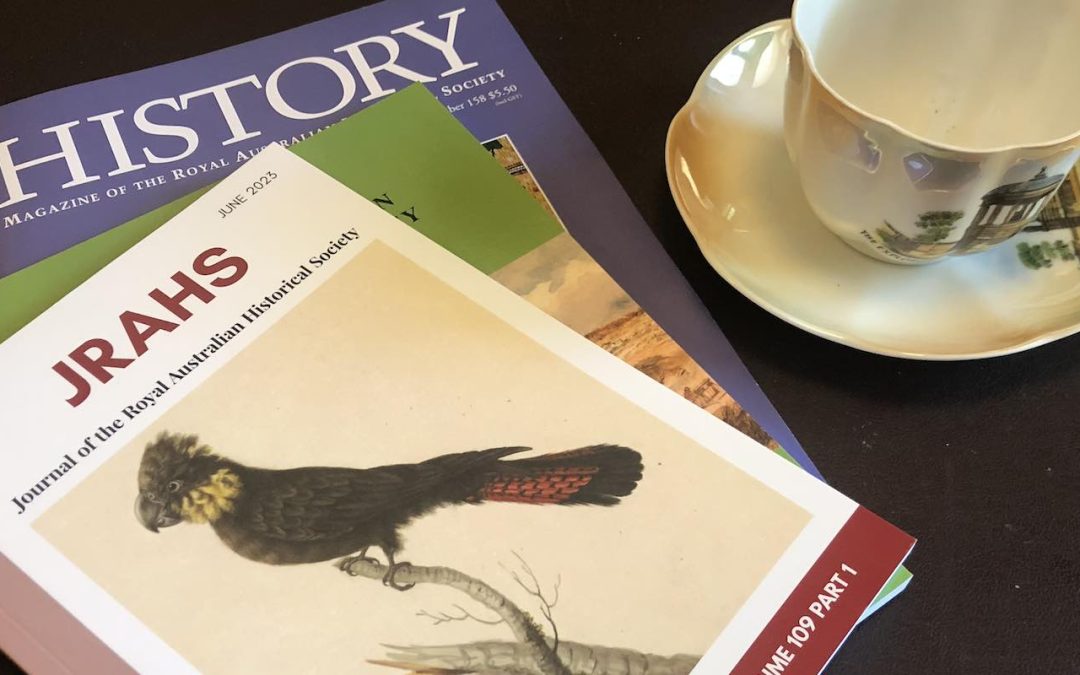
A watercolour of Wangal man Bennelong wearing white ochre on the RAHS Journal's cover.

The June 2025 issue of the Journal of the Royal Australian Historical Society (Vol. 111, Part I) explores new perspectives on colonial authority, identity, and Australia’s contested past. As Editor Dr Samuel White outlines in his foreword, this issue reflects the Journal’s original intent: to challenge dominant narratives and recover overlooked voices from across Australia’s history.

Dr Keith Amos revisits the 1790 spearing of Governor Arthur Phillip at Manly, interrogating the now-popular view that it was a ritualised ‘payback’. Drawing from firsthand accounts and contextual evidence, Amos offers a more immediate and reactive explanation — one rooted in personal fear, miscommunication, and the tense dynamics of early colonial encounters. His reassessment casts new light on Indigenous agency and the complexity of cross-cultural exchange in early Sydney.

Dr Geoffrey Gray examines the career of anthropologist Frederick G. G. Rose, whose unorthodox views and research methods challenged the institutional boundaries of the Australian Institute of Aboriginal Studies. Gray’s article explores how Rose’s intellectual independence brought him into conflict with government-backed visions of knowledge and cultural representation, offering a case study in the politics of academic freedom and the enduring tension between research integrity and institutional control.

Dr Mark St Leon turns to the life of John [Milner] Clark, a fugitive from justice and an army deserter who remade himself as a respected settler in Wagga Wagga. Beneath Clark’s civic reputation lay a hidden fugitive past. Through meticulous archival reconstruction, St Leon traces a story of reinvention and concealment, revealing the fluidity of identity in colonial Australia and the ways in which reputation, exile, and personal history intersected in the frontier world of the nineteenth century.

Chris Maxworthy uncovers a little-known moment in Australia’s strategic history: a Spanish plan to attack Sydney in 1796, devised by Brigadier José Bustamante and revealed through newly translated documents. Maxworthy’s research highlights the global context of early New South Wales, showing how Britain’s fledgling colony was deeply enmeshed in European rivalries. Far from being an isolated outpost, Sydney was a node in an imperial chessboard — vulnerable, contested, and far more internationally visible than often assumed.

This volume also features reviews of new works on convict orphans, forgotten war heroes, Irish lawyers, and the origins of Australian scientific institutions. Each piece speaks to the evolving shape of Australian historical scholarship.

CLICK HERE TO DOWNLOAD

Members can download the Journal and other publications from the members’ area. For instructions on how to use the members’ area, watch our short instructional video. Contact us if you need assistance.

Don't miss a post. Subscribe below to receive a round-up of the week's content.

Symbols of Australia: A Look at the Icons That Shape Us

Symbols of Australia: A Look at the Icons That Shape Us

A Presentation by Richard White

MacAdams Music Centre, Port Macquarie

Saturday, 19 July 2025

alt

Why do we wear a sprig of wattle, queue for a democracy sausage, or argue about flags?

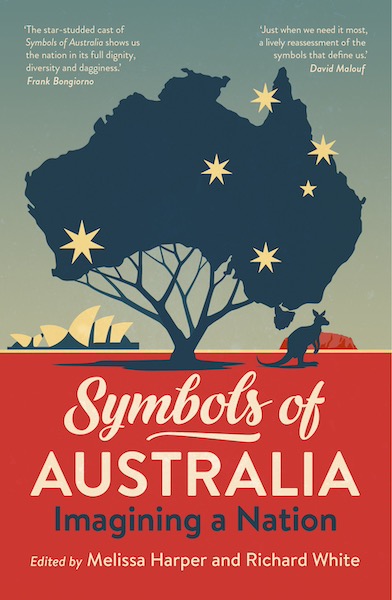
Symbols of Australia offers illuminating — and often surprising — insights into the symbols that shape how we see ourselves as a nation. From Uluru to the Australian flag, the rainbow serpent to the FJ Holden, the southern cross to the democracy sausage, the Akubra to the Great Barrier Reef, these symbols are often inspiring, occasionally embarrassing, yet always revealing.

Join us on Saturday, 19th July, at the MacAdams Music Centre, Port Macquarie, for a special talk by acclaimed historian Richard White. Presented by the Royal Australian Historical Society, supported by Create NSW, and held in collaboration with the Port Macquarie Historical Society, this event is part of the RAHS’s ongoing commitment to regional outreach and to sharing Australia’s rich and diverse history with communities across NSW.

RAHS Councillor Richard White, co-author of Symbols of Australia: Imagining a Nation, will explore how these familiar icons both reflect and shape our evolving sense of national identity. ‘National symbols never stand still — they are crucial in how we think of Australia,’ says Richard White. ‘We often think of them as fixed, but it is surprising how much they have changed over time — capturing everything from our national dignity to our everyday dagginess.’

RAHS Senior Vice President Christine Yeats adds: ‘The RAHS is grateful to Create NSW for supporting this event in Port Macquarie. It reflects our commitment to regional outreach and to sharing Australia’s rich and diverse history with communities across the state.’

Port Macquarie Historical Society Vice President Debbie Sommers highlights the value of the RAHS regional outreach program: ‘Events like this help regional audiences explore new aspects of Australian history. Local symbols — from Tacking Point Lighthouse to the Breakwall and the koala — are reflected in the stories we collect and share at the Port Macquarie Museum.’

The event will commence with morning tea at 10.00 am, followed by Richard White’s presentation at 10.30 am, including a Q&A session. The event will conclude by midday.

alt

Don't miss a post. Subscribe below to receive a round-up of the week's content.

RAHS 2025 Annual General Meeting

RAHS 2025 Annual General Meeting

RAHS 2025 Annual General Meeting

The RAHS held its 2025 annual general meeting via Zoom on 15 April 2025, with members joining RAHS Councillors to review the annual and financial reports.

The following motions were passed unanimously:

  • Confirmation of the minutes from the previous annual meeting held 16 April 2024
  • Adoption of the RAHS Annual Report for the year ended 31 December 2024
  • Adoption of the RAHS Financial Accounts for the year ended 31 December 2024

RAHS Council Nominations

The 2025 Council nominations were:

  • Bronwyn Hanna
  • Mark St Leon
  • Christine Yeats

The RAHS thanks Judith Dunn and Craig McPherson for their contribution during their terms as RAHS Councillors.

President’s Address

RAHS President Iain Stuart has announced he will step down after three years in the role, in line with the RAHS Constitution. He thanked Councillors and staff for their support and hard work during his term.

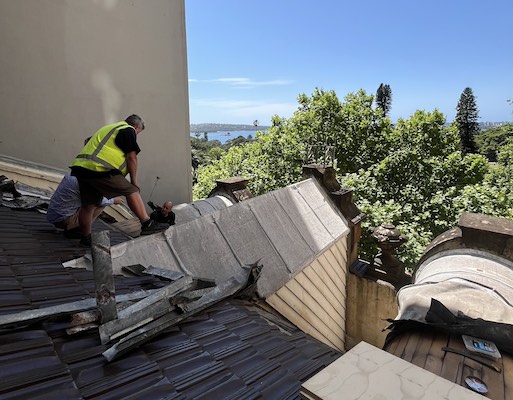
Dr Stuart reflected on the challenges of rescoping the History House Project, with a current focus on roof repairs, drainage upgrades, and addressing subsidence—vital steps to secure the building’s long-term future. He also acknowledged key initiatives including the rollout of the online catalogue and expansion of hybrid events to improve access and engagement.

He concluded by inviting members to the upcoming RAHS/National Archaeology Week 2025 event, which he will host. The session will explore the Irrawang site—an important early colonial industrial site and one of the first historical archaeological projects undertaken in Australia, with insights from leading archaeologists. Book here.

2025/2026 RAHS Executive and Council

After the AGM, the RAHS Special Council was held to elect the RAHS Executive. The 2025-2026 RAHS Executive and Councillors are listed below.

  • President: Carol Liston
  • Senior Vice President: Christine Yeats
  • Vice-President: Mark St Leon
  • Treasurer: Kathrine Reynolds
  • Other Executive Member: Mark Dunn
  • Councillors: Judith Godden, Bronwyn Hanna, Iain Stuart, Richard White, Samuel White, Alison Wishart

We will introduce our Council to our members and eNews readers in the next edition.

Don't miss a post. Subscribe below to receive a round-up of the week's content.

2025 Easter to Anzac Day Closure

2025 Easter to Anzac Day Closure

Easter/Anzac Day Close 2025

18 April to 25 April 2025

History House will be closed between the Easter and Anzac Day public holidays. (Friday, 18 April to Friday, 25 April 2025). RAHS employees will return on Monday, 28 April 2025.

We wish all our members and friends a safe holiday break.

Don't miss a post. Subscribe below to receive a round-up of the week's content.

Evening with the Editor: A Legacy in Print Recordings

Evening with the Editor: A Legacy in Print Recordings

A Legacy in Print: Honouring the Past and Embracing the Future of the JRAHS

Celebrate the storied past of the Journal of the Royal Australian Historical Society (JRAHS), an essential outlet for Australian history since 1906.

Recorded live at History House on 25 February 2025, this event was chaired by Dr Samuel White, the Editor of the JRAHS. It provided a platform for discussions with a cross-section of past contributors, including local, early-career, and professional historians. The panel shared their inspirations, research methods, and advice for anyone considering submitting to the journal.

Learn more about the Journal of the Royal Australian Historical Society

Click on the images below to watch the recordings.

About the speakers:

Dr Samuel White is the Editor of the Journal of the Royal Australian Historical Society.

Ben Hingley is a legal historian and a doctoral candidate at the University of New England. His thesis is on martial law in the pre-Federation colonies.

Christine Yeats FRAHS is an archivist, Professional Historian and a former RAHS President. She is a past editor of the JRAHS and the current JRAHS Review Editor.

David Carment AM is Emeritus Professor of History at Charles Darwin University and a former RAHS President. The JRAHS published his first academic journal article in 1977.

Leonie Bell is a tour guide and local historian who has won the Ron Rathbone History Prize four times for her local history research. She is an active member of the Botany Bay Family History Society.

Don't miss a post. Subscribe below to receive a round-up of the week's content.

2024 Christmas Close

2024 Christmas Close

RAHS Christmas Close 2024

The RAHS wishes all its members and friends a Merry Christmas and a safe holiday during the Summer break. We thank you all for your support in 2024.

History House will be closed from 12 pm on Friday, 20 December 2024 to 9 am on Tuesday, 14 January 2025. RAHS employees will return on Monday, 6 January, but will work remotely until History House reopens on Tuesday, 14 January 2025.

Don't miss a post. Subscribe below to receive a round-up of the week's content.

2024 Certificates of Achievement and Appreciation

2024 Certificates of Achievement and Appreciation

2024 Certificates of Achievement

RAHS Affiliated Societies are critical in promoting local and community history. The RAHS Certificates of Achievement honour the wide-ranging contributions made by their members.

Nominated by Australian Catholic Historical Society

James Franklin

Photo of James FranklinFor his dedication and involvement with the Society. Since 2011, James has served as Vice President, sole production editor of the journal and webmaster since 2019. He has contributed to varied Society matters, speakers and talks, and assisted with a successful 2023 Create NSW Cultural Grant for writing the Society’s history. An author of several books and articles on Australian Catholic history and other academic topics, his invaluable ongoing contributions to the Society are appreciated.

Nominated by Berrima District Historical and Family History Society

Denyse Barker

Photo of Denyse BarkerFor her commitment and significant contributions to the Society since 2007. As a regular volunteer in the archives, Denyse’s projects have included assisting researchers with enquiries, scanning and cataloguing the Society’s large photographic collection, and being instrumental in making this collection available in the online image library. She has served on the Management Committee since 2010 and is currently Minutes Secretary.

Patricia Doris

Photo of Patricia DorisFor her commitment and service since 2011. Using her administrative skills, Patricia has served on the Management Committee since 2013, Treasurer for ten years and Secretary since 2023. She is involved with the archives and museum and has administered several large grants for building and development projects awarded to the Society. The Society acknowledges Patricia’s significant contributions throughout the years.

Ian Mackey

Photo of Ian MackeyFor his significant contributions to the Society for over 18 years. Ian has had active roles in the archives, museum and Society activities. As President from 2017–2023, he was involved in negotiations with the local council to secure tenancy of the building that houses the Society’s archives in Mittagong. The Society and the community recognise and appreciate Ian’s worthwhile voluntary contributions.

Nominated by City of Liverpool and District Historical Society

Glen op den Brouw

Photo of Glen op den BrouwFor his energetic leadership as President for nine years. Glen’s passion for local history stimulated his quest to obtain suitable premises for the Society and its collections. After decades of homelessness, with collections in storage and nowhere for members to meet, he was able to negotiate with the local council for a permanent home in the former Senior Citizen’s Centre. The Society recognises his continuous dedication and passion.

Nominated by Marrickville Heritage Society

Ian Tyrrell

Photo of Ian TyrrellFor his many contributions to the built and environmental heritage of Marrickville. Ian was a founding member of the Society in 1984 and is currently a Committee Member. Through his research, publications, talks and tours, he has been a strong advocate for the local heritage and environment of the Marrickville and Cooks River area. The Society and the community recognise and appreciate Ian’s worthwhile contributions.

Nominated by Parramatta and District Historical Society

Bruce Gregory

Photo of Bruce GregoryFor his contributions to the Society since 2017 as an active volunteer. Since 2018, he has served as a Councillor, is involved as a Committee Member with the maintenance and gardens of Hambledon Cottage, and is an active school guide for the museum, becoming Convenor of the Gardening Committee in 2023. Bruce was awarded a Certificate of Merit in 2022 for his service to the Society and Hambledon Cottage. The Society recognises and appreciates his contribution and dedication.

Verne Tuckwell

Photo of Verne TuckwellFor his commitment and voluntary service to the Society since 2003. Verne’s activities include installing and managing the security services at Hambledon Cottage, undertaking many night callouts, and being involved with the maintenance and gardening at the museum since 2015. He was awarded a Certificate of Merit in 2016 for his service and contributions to the Society. The Society and the community recognise and appreciate Verne’s loyalty and worthwhile contributions over the past decade.

Nominated by Port Macquarie Historical Society

Clive Smith

Photo of Clive SmithFor inspirational leadership in the management and development of the Society and outstanding management of the archives and photograph collection since 2013. Clive’s careful research and archival skills supported the successful nomination of the Annabella Boswell Papers for inscription to the UNESCO Memory of the World Register. As a researcher and author, he has mentored members while his publications have been recognised as significant contributions to local and Australian history.

Nominated by Ryde District Historical Society

Kim Phillips

Photo of Kim PhillipsFor her outstanding commitment to the Society since 2010. As well as holding many Committee positions, including President and Treasurer, in 2016, Kim initiated digital technologies to make the Society’s collections more accessible. She has designed and assisted with the production of Society publications, liaised with local community groups, supported open days and research meetings, and mentored intern students. The Society acknowledges Kim’s significant contributions throughout the years.

Nominated by Shoalhaven Historical Society

Tim Rigney

Photo of Tim RigneyFor his commitment and service to the Society since 2010. Tim has served as Secretary since 2012 and Treasurer since 2021. He created and administers the Society’s new website, online bookshop, and data entry programs, resolves technology issues, publishes the newsletter, and is the editor of the quarterly journal. Tim assists with maintaining the Society’s exhibits and grounds and is proactive in recruiting volunteers, organising duty rosters and undertaking grant applications. The Society and Nowra Museum appreciate his invaluable contributions.

Nominated by The Oaks Historical Society

Doreen Lyon

Photo of Doreen LyonFor her contribution to the Society as a charter member and exhibition curator of the museum since 1988. Her background in graphic design, constantly updated over the years, has produced stimulating exhibitions that showcase Wollondilly Shire’s history. As a mentor to other members, she is ensuring that this will continue. Doreen’s voluntary service to the community for 36 years is appreciated and recognised by the Society.

2024 Certificate of Appreciation

The RAHS Certificate of Appreciation honours the contribution made by RAHS volunteers.

Lynne Allen

Photo of Lynne AllenLynne joined the RAHS and served as a RAHS Councillor from 2013–2024. As an enthusiastic and invaluable Chair of the RAHS Affiliated Societies Committee (ASC) from 2014, she brought her practical insight from her work as President of the Shoalhaven Historical Society and the Shoalhaven Family History Society to inform our programmes for affiliates. In the past year since she ceased being a RAHS Councillor, Lynne has continued her work with the ASC and in the organisation of the 2024 RAHS Conference. This certificate honours her work with the ASC.

Don't miss a post. Subscribe below to receive a round-up of the week's content.

The 2024 Lesley Muir Address

The 2024 Lesley Muir Address

The 2024 Lesley Muir Address

Writing a ‘Local’ History of Australia

The 2024 Lesley Muir Address will be presented during the 2024 RAHS Conference at Campbelltown by Emeritus Professor Mark McKenna FAHA.

In early 2022, Mark McKenna set out to write a short history of Australia, which will be published late next year by Black Inc. In this year’s Lesley Muir Address, he will explain how local history will form the foundation of his history of Australia.

All too often, history is filed according to its geographical span – local, regional, state, national or global – as if certain histories are only of interest to certain readers. But how can we challenge and enlarge our view of Australian history by dismantling these boundaries? And how might close observation of local history help to radically shift our understanding of the writing of Australian history?

Mark McKenna is one of Australia’s leading historians. He is Emeritus Professor at the University of Sydney and the Australian National University. He is the author of several prize-winning books, including From the Edge: Australia’s Lost Histories, Looking for Blackfellas’ Point and An Eye for Eternity: The Life of Manning Clark, which won the Prime Minister’s Literary Award for nonfiction and the Victorian, New South Wales, Queensland and South Australian premiers’ awards. His latest book, Return to Uluru, won the Northern Territory History Prize and was shortlisted for the Australian History Prize in the Prime Minister’s Literary Awards.

Learn more about the Lesley Muir Address and past addresses.

Find out more about the 2024 RAHS Conference at Campbelltown.

Don't miss a post. Subscribe below to receive a round-up of the week's content.

2024 RAHS Conference bookings now open – early bird tickets available until 30 September

2024 RAHS Conference bookings now open – early bird tickets available until 30 September

2024 RAHS Conference at Campbelltown

Windows into Local History

Bookings have now opened for the 2024 RAHS Conference, which will be held on 26–27 October at Campbelltown Catholic Club. Early-bird prices are available until 30 September.

RAHS President Dr Iain Stuart said, ‘The theme Windows into Local History reflects our commitment to uncovering and sharing the rich tapestry of our local communities. I look forward to meeting delegates at the conference and exploring these fascinating stories together.’

Our keynote speaker is Emeritus Professor Mark McKenna FAHA, author of several prize-winning books, including From The Edge: Australia’s Lost Histories. In this year’s Lesley Muir Address, he will explain how local history will form the foundation of his forthcoming short history of Australia.

The conference program features topics on Campbelltown, the Fisher’s Ghost Festival, and digital tools and resources to support your history projects. There are also plenty of opportunities to network, including a welcome reception on Friday, 25 October, hosted by the Campbelltown and Airds Historical Society at the Campbelltown Arts Centre. There will be three Saturday tour options for conference delegates: a tour of the Glenalvon House, a guided walking tour, and a bus tour of heritage highlights. On Sunday, 27 October, we will present the Certificates of Achievement, which recognise the invaluable contributions made by individuals to historical societies throughout New South Wales.

Don’t miss this opportunity to engage with passionate speakers, network with fellow history enthusiasts, and explore the vibrant history of the Campbelltown region. Secure your spot now to receive a discount on your tickets!

Check out the 2024 RAHS Conference website to explore the program and all that Campbelltown has to offer, including its landmarks, galleries and historic sites.

We look forward to seeing you at the Conference!

Don't miss a post. Subscribe below to receive a round-up of the week's content.

JRAHS Vol 110 Pt. 1 June 2024 – Editorial

JRAHS Vol 110 Pt. 1 June 2024 – Editorial

Journal of the Royal Australian Historical Society

Vol 110 Pt 1 June 2024

Editorial

A painting of a canon below the deck of a ship on the RAHS Journal's cover.

Coming to the helm as Editor of the Journal, I am pleased that my first issue is one that responds to feedback from the Royal Australian Historical Society community. I am proud that it reflects that at its core, the Journal is a publication from members, for members, by members, and with members. As such, it has sought to give a spotlight to member submissions (within this issue) and member ideas (such as the new ‘Interpreting an Image’).

In the intricate tapestry of history, there are often overlooked threads that, when unravelled, reveal fascinating narratives of human resilience, struggle, and ingenuity. The submissions of various research endeavours presented here provide a glimpse into these forgotten landscapes, shedding light on aspects of Australian history that have long been overshadowed by more prominent narratives. From the misfortunes of Lieutenant Charles Jeffreys to the use of legal regulations in labour struggles with railway navvies, and from the power of storytelling to the resilience of communities during times of economic hardship, I believe each paper explores and sheds light onto a distinct facet of the Australian experience.

The story of Lieutenant Charles Jeffreys and his ill-fated command of the Kangaroo serves as a poignant reminder of the challenges faced by early colonial administrators. Governor Macquarie’s scathing assessment of Jeffreys as ‘inactive and negligent’ underscores the complexities of leadership in a rapidly evolving colonial context. Jeffreys, if inactive and negligent, was no different to other colonial leaders before or after him (including up to the present). By examining previously overlooked aspects of Jeffreys’ tenure, Ian Dodd provides a more nuanced understanding of his character and competence, ultimately reassessing the validity of Macquarie’s harsh judgment.

In contrast to the struggles of colonial administrators, the paper by Dr Terry Kass highlighting the plight of railway navvies through the lens of legal regulations offers a glimpse into the harsh realities faced by working-class labourers during the era of industrialisation. As the arteries of the modern world, railways facilitated economic growth and connectivity, yet behind the scenes, the toil of railway navvies laid the foundation for this transformative infrastructure. Robert Hughes in his seminal work, The Fatal Shore, posited that the deeply militarised society of the early Sydney colony and the use of military personnel to aid the civil power against industrial action had led to the particularly Australian aversion to strike-breaking. This is something that I have written on elsewhere and agree with completely. I believe that Dr Kass’s wonderful research confirms this. The paper speaks to the resilience and determination of those whose labour often goes unrecognised in the annals of history.

Shifting our focus from physical infrastructure to cultural heritage, the abstracts discussing the influence of Ion Idriess’s Drums of Mer (amongst Idriess’s many famous works, now starting to make a revival within Australia) and the enigmatic Four Gospels offer insights into the power of storytelling and the complexities of colonial encounter. Through these texts, we glimpse two societies engaging beyond the colonial gaze (of Torres Strait Islanders and Indigenous Australian warfare) as well as the enduring impact of narrative on collective memory. With the ‘Coming of the Light’, we see as well the intersections of faith, culture, and identity in the colonial context. Rob Coutts grapples with questions of authenticity and interpretation, seeking to unravel the intricate layers of influence and meaning embedded within these texts.

Finally, Leonie Bell’s paper detailing the forgotten history of Canvas Towns and makeshift settlements during the Great Depression and World War I sheds light on the resilience of communities in the face of economic hardship. These forgotten landscapes, scattered across the sand hills and scrub of Sydney, offer a glimpse into the ingenuity and resourcefulness of those who sought shelter and stability during tumultuous times. The discovery of Canvas Town, hidden from view on maps of the period, serves as a poignant reminder of the importance of uncovering and preserving forgotten histories for future generations.

These are the substantive papers. In addition to them, this issue of the Journal introduces the idea of ‘Interpreting an Image’. The suggestion came directly from RAHS member Dr Bruce Pennay and replicates the excellent work done by other branches of Australian historical societies. As I have noted in my ‘Vision for the Journal’, my aim over the stewardship of this publication is to reduce the professional (and institutional) barriers to Australian history. There is a lot in our backyard (figuratively and literally) to be written about and this need not be in a dense, archaic form of a journal article. This is not to say there is not a time and place for in-depth academic writing. However, if the JRAHS seeks to engage more with its members and local historians, new means and methods must be found. I am excited then that this issue highlights the first tranche of this new development for the Journal.

In conclusion, the papers presented here offer a diverse array of narratives that collectively enrich our understanding of the Australian experience. From the struggles of colonial administrators and working-class labourers to the resilience of communities during times of economic hardship, each abstract reveals a different facet of the Australian story. As researchers continue to delve into these forgotten landscapes, they remind us of the importance of preserving and honouring the diverse voices and experiences that shape our shared history.

Dr Samuel White

Editor, Journal of the Royal Australian Historical Society

Media Enquiries:
Suzanne Holohan, General Manager, Royal Australian Historical Society.
E: history@rahs.org.au, Ph: (02) 9247 8001.

RAHS members can download and read articles published in the Journal by logging into their online members’ account. Click here to log in to your member account.


Don't miss a post. Subscribe below to receive a round-up of the week's content.