RAHS Subscriptions: Journals – Vol 106 pt 1 June 2020 ABSTRACTS

RAHS Subscriptions: Journals – Vol 106 pt 1 June 2020 ABSTRACTS

RAHS Subscriptions: Journals – Vol 106 pt 1 June 2020 ABSTRACTS

The Elusive Reginald Benjamin Levien: Victoria’s commercial agent in Asia, fraudster, recidivist

James Cotton

R. B. Levien was appointed in 1905 Victorian commercial agent in North Asia. Setting up office in Shanghai in late 1906 he and his colleague Frederic Jones of Queensland were the first Australian government officials based in China. Levien’s appointment was an act of patronage and he endured a sustained press campaign critical of his role, but his work to 1909 coincided with expanding Victorian trade with Asia. An elusive personality who receives scant mention in the literature, he was subsequently gaoled for fraud. This article also establishes that, later serving in the AIF under an assumed name, he spent a year in military prison similarly for fraud.


Anna Blackwell, Sydney Morning Herald correspondent in Paris (1860-90)

Patricia Clarke

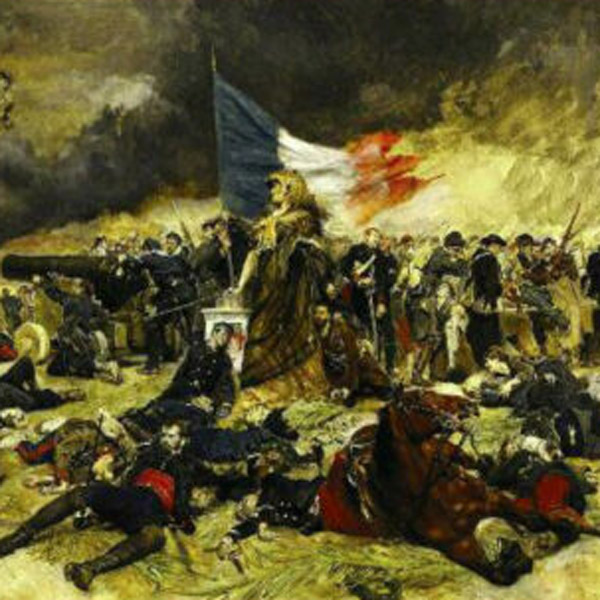
Anna Blackwell’s dispatch as she fled Paris when the Prussian Army approached the capital in 1870 was a high point of her long representation as the Sydney Morning Herald’s correspondent in France. Appointed in 1860 when only a handful of women in Australia had any journalistic association with newspapers, the Fairfax family valued her ‘gossiping’ style. Her dramatic dispatch on the Franco-Prussian War reveals several facets of the changing face of Australian press history. Two years later cable communication revolutionised many aspects of news gathering and production. Major news arrived in hours but dispatches from correspondents such as Blackwell continued to be sent by ship mail. This had ramifications for the perceived value of their dispatches.


Speculator, Settler, Selector, Squatter, Surveyor: Surveyors and the Land Laws, 1860s to 1880s

Terry Kass

The two decades after the passing of the Crown Lands Alienation and Occupation Acts of 1862 until 1884 when the Acts were considerably revised was a pivotal period in land settlement in New South Wales. The establishment of ‘free selection’ began a frenzy of land acquisition by selectors and squatters who hoped to protect their runs from selectors. Surveyors were tasked with measuring land particularly Conditional Purchases established by the Alienation Act. They gained considerable knowledge of the workings of the Act as well as the districts to which they were assigned. Surveyors also acquired land. How did their land-use affect their professional role of measuring and assessing land? What checks and balances were in place ensuring that they did not indulge in unethical practices? This article examines the experiences of three typical Licensed Surveyors active from 1862 and 1884 and beyond to examine these issues.


No Band of Brothers: Officers and internal politics in the 19th Australian Infantry Battalion, 1915-1918

William Westerman

Mythology concerning the Australian contribution to World War I minimises important aspects about the experience of officers, including issues of competence and ineffectiveness, as well as internal frictions and rivalries. This article provides a more complex view of Australian officers, presenting the history of senior officers in the 19th Australian Infantry Battalion. It shows how officers moved through the Australian Imperial Force as an organisation, and that the battalion was rife with ambitious officers, personal rivalries and that internal politics was a large factor in determining which officers were promoted.


Percy Gledhill’s memorial to Aboriginal People

Keith Amos

On a public reserve beside the Hawkesbury River near Lower Portland, a little-known memorial obelisk is dedicated: ‘To the Aborigines of the Hawkesbury for whom this area was originally reserved’. Unveiled in 1952, it was instigated by Percy Gledhill (1890-1962), councillor and fellow of the Royal Australian Historical Society. The memorial commemorates Sackville Reach Aboriginal Reserve (1889-1946), founded by the Aborigines Protection Board and serviced by resident missionaries from the NSW Aborigines Mission. This article outlines the reserve’s history with particular attention to Gledhill’s role in organising the monument.


Book Reviews

Geoffrey Blainey, Before I Forget: an early memoir, Hamish Hamilton, an imprint of the Penguin Random House group of companies, 2019, x + 340 pages; ISBN 9781760890339.

Russell McGregor, Idling in Green Places: a life of Alec Chisholm, Australian Scholarly Publishing, Melbourne, 2019, viii + 285 pages; ISBN 9781925801996.

Michael Molkentin, Anzac & Aviator: the remarkable story of Sir Ross Smith and the 1919 England to Australia Air Race, Allen & Unwin, Crows Nest, NSW, 2019, xviii + 406 pages; ISBN 9781742379197.

Emily Maguire, This is What a Feminist Looks Like: the rise and rise of Australian feminism, Canberra, ACT, NLA Publishing, 2019, 249 pages; ISBN 9780642279453.

Terry Kass, Unlocking Land: a guide to Crown Land records held at State Archives NSW, Terry Kass, Lidcombe, NSW, 2019, 238 pages; ISBN 9780648377504.

Bettina Bradbury, Caroline’s Dilemma: a colonial inheritance saga, NewSouth Publishing, Sydney, 2019, ix + 335 pages; ISBN 9781742236605.

Carolyn Holbrook and Keir Reeves (eds), The Great War: aftermath and commemoration, NewSouth Publishing, Sydney, 2019, vii + 296 pages; ISBN 9781742236629.

Callum Clayton-Dixon, Surviving New England: a history of Aboriginal resistance and resilience through the first forty years of the colonial apocalypse, Anaiwan Language Revival Program, Armidale, NSW, 2019, 176 pages; ISBN 9780646812397.

Jane Lydon and Lyndall Ryan (eds), Remembering the Myall Creek Massacre, NewSouth, Sydney, 2018, 215 pages; ISBN 9781742235752.

Lenore Coltheart and Amie Nicholas (eds), The Timber Truss Bridge Book, Transport for NSW, Auburn, NSW, 2019, xiv + 210 pages; ISBN 9781925891324.

Desley Deacon, Judith Anderson: Australian star, first lady of the American stage, Kerr Publishing Pty Ltd, Melbourne, Vic, 2019, ix + 509 pages; ISBN 9781875703180 (eBook), ISBN 9781875703067 (Print on Demand).
RAHS Subscriptions: Journals – Vol 105 pt 2 Dec 2019 ABSTRACTS

RAHS Subscriptions: Journals – Vol 105 pt 2 Dec 2019 ABSTRACTS

RAHS Subscriptions: Journals – Vol 105 pt 2 Dec 2019 ABSTRACTS

The Physical Endeavour: how a wooden ship shaped Cook’s first circumnavigation

Claire Brennan

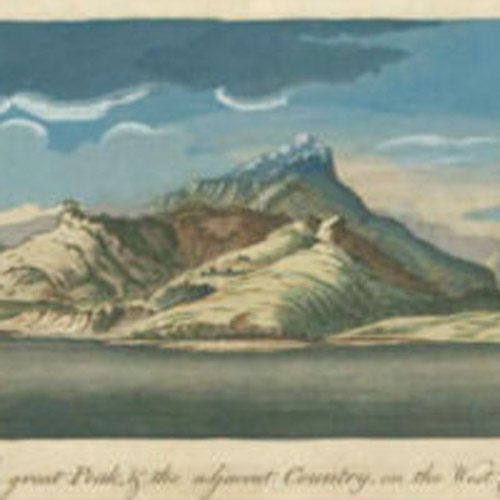
This article examines the role of his vessel in James Cook’s first Pacific voyage. The Endeavour strongly influenced what Cook was able to attempt and its limitations directed the course of the voyage. A close reading of the journals of Cook and Joseph Banks reveals the ways in which the physical conditions of the vessel influenced the voyage and casts fresh light on the Endeavour’s voyage around the world.

Governor King and the illicit distillers, 1800-1806

Darren Hopkins

This article consists mostly of unpublished manuscript material concerning cases of illicit distillation brought before the Magistrates during the administration of Governor King, notably the first prolific period of colonial distillation during the last years of his governorship, 1805-06. Most of the distillers tried during this period were comprised of the ‘United Irishmen’ involved in the Irish Rebellion of 1798, who had begun to arrive in the Colony in 1800, but also consisted of a broader spectrum of the colonial population, such as the English convicts, free settlers, and ex-military personnel. This article also highlights the conflict regarding the prosecution of illicit distillers between the Governor versus the Judge Advocate and the Sydney, Parramatta and Hawkesbury Magistrates (some of whom were also distillers).

The 1820 influenza outbreak in Sydney and its impact on Indigenous and settler populations

Denis Gojak

Reflecting on its impending bicentenary, this paper explores Sydney’s first influenza epidemic in mid-1820 through a range of source material. It caused perhaps a hundred deaths among its settler inhabitants and affected all parts of the community. Less well understood is the impact it had on the Aboriginal people of southeastern Australia, although we know that many deaths resulted. Although variable in its effects, the influenza epidemic had broader importance in weakening Indigenous resistance to pastoral expansion, as European expansion in Australia and the Pacific became increasingly associated with rapid transfer of infectious diseases. It presents a novel use of biographical and demographic data to understand the effects of influenza on isolated populations.

Enid and Elaine de Chair: Government House and Modernism in Sydney

Anne Sanders

Lady Enid de Chair was the very popular and active vice-regal wife of the 25th Governor of New South Wales, Admiral Sir Dudley Rawson Stratford de Chair, KCB, MVO. Enid’s support of early Australian modernist artists in Sydney and her indefatigable support of women’s clubs and organisations, make her a very interesting subject in her own right. She amassed a significant Australian art collection, some of which has returned to Australia in auction sales. An energetic, enthusiastic and adventurous woman – born in South Africa, educated in England, started her married life in America – she travelled widely with a young family. During their vice-regal tenure, both de Chair women – mother Enid and daughter Elaine – were acknowledged as having played important roles as active, modern, forthright women. For Lady de Chair, as chatelaine of Sydney’s Government House by the glorious harbour, it was her happiest home.

Reverend George Soo Hoo Ten

Howard Le Couteur

The Reverend George Soo Hoo Ten was the first Chinese person ordained in the Anglican Church (Church of England) in Australia, in December, 1885. It was a time of rising anti-Chinese feeling, and his active ministry was backgrounded by a strong racist discourse. His ministry, though based amongst the Chinese population of Sydney, was not geographically limited, as he was regularly visiting Chinese communities in rural New South Wales and other Australian colonies. He was also very active in training Chinese catechists for the evangelisation of their countrymen. In fact, the ministry to the Chinese community was dependent on the work of these Chinese catechists. His story is part of a larger story of the work of various churches amongst Chinese settlers.

Book Reviews

Penny Olsen and Lynette Russell, Australia’s First Naturalists: Indigenous peoples’ contribution to early zoology, NLA Publishing, Canberra, ACT, 2019, v + 223 pages; ISBN 9780642279378.

Michelle Arrow, The Seventies: the personal, the political and the making of Modern Australia, NewSouth Publishing, Sydney, 2019, 296 pages; ISBN 9781742234700.

Mark Dapin, Australia’s Vietnam: myths vs history, NewSouth Publishing, Sydney, 2019, viii + 261 pages; ISBN 9781742236360.

Greg Young (ed) in association with The Paddington Society, Paddington: a history, NewSouth Publishing, Sydney, 2019, xiii + 325 pages; ISBN 9781742235981 (paperback) 9781742236117 (hardback).

Pam Menzies, Port Kembla: a memoir, Arcadia, North Melbourne, 2019, xiii + 220 pages; ISBN 9781925801590.

Rosemary Kerr, Roads, Tourism and Cultural History: on the road in Australia, Tourism and Cultural Change Series No. 53, Channel View Publications, Bristol, UK, 2019, xiii + 290 pages; ISBN 9781845416683.

Max Waugh, An Ungodly Generation: the Irish National Schools era in colonial Australia 1848-1866, Melbourne Books, Melbourne, Vic, 2019, 262 pages; ISBN 9781925556452.

James Dunk, Bedlam at Botany Bay, NewSouth, Sydney, 2019, x + 308 pages; ISBN 9781742236179.

Eileen Chanin, Capital Designs: Australia House and visions of an Imperial London, Australian Scholarly Publishing, North Melbourne, Vic, 2018, xviii + 416 pages; ISBN 9781925801316.

Peter Valentine, World Heritage Sites of Australia, NLA Publishing, Canberra, 2019, 300 pages; ISBN 9780642279422.

RAHS Subscriptions: Journals – Vol 105 pt 1 June 2019 ABSTRACTS

RAHS Subscriptions: Journals – Vol 105 pt 1 June 2019 ABSTRACTS

RAHS Subscriptions: Journals – Vol 105 pt 1 June 2019 ABSTRACTS

The women in Arthur Phillip’s life

Michael Flynn

Arthur Phillip, first governor of New South Wales 1788-1792, married twice. As an aspiring naval lieutenant of 24 he married Charlotte Denison née Tibbott, a wealthy widow of 42. Thirty-one years later, at 55, he married Isabella Whitehead, a wealthy single woman of 43. Neither of these women ever came to NSW, but their stories are intertwined with that of the colony’s first Governor and shed light on his enigmatic character. Phillip, the ambitious son of a German immigrant and an ordinary Londoner, chose to marry two ‘women of fortune’ who remained childless. Their wealth, manorial estates, social position and connections helped make his career a success.

Macquarie and the Towns

Iain Stuart

This paper discusses the creation of the “Macquarie Towns” in 1811 in the context of the experiences of Lachlan and Elizabeth Macquarie with “improvement” and “planned towns” in Scotland. The improvement of estates and the creation of planned towns or villages were part of the so-called “Scottish Enlightenment”. It is shown that the concept of improving estates and the creation of planned towns would have been familiar to both Lachlan and Elizabeth Macquarie through their direct experience of such estates and interaction with “improvers”. It is argued that this experience was part of the cultural baggage brought to Australia by the Macquarie’s and applied in the case of the settlement along the Hawkesbury, in particular Windsor. The founding of the Macquarie towns was Macquarie’s first major act as governor and at once emphasised his authority and ability to impose order on disorder. In doing so, Macquarie brought his practical experience and personal knowledge of improvement and planned towns, as well as his instructions as Governor to solve the “problem” of the Hawkesbury settlement by creating the towns.

Histories of the Chinese in regional NSW 1850 to 1950

Janis Wilton

The past two decades have witnessed a significant growth in research and writing on the histories of Chinese in regional New South Wales. This work taps into broader developments in the study of migration and of Chinese-Australians, and builds from locally focused and supported studies. It is also informed by interdisciplinary approaches and by the opportunities presented through various forms of public history. This article tracks and comments on these developments, identifies key features, suggests areas for further research, and provides annotated endnotes that invite engagement with the variety of research, writing and public history on the Chinese in regional New South Wales.

The introduction of barbed wire to lineside fences of the New South Wales Railways

John Pickard

The first railways built in Britain were regarded with considerable suspicion. Land-owners were concerned that the noise and rapid movement of trains would scare cattle and sheep, or worse, would kill their stock if they strayed onto the lines; and travellers worried that their horses would bolt when they saw trains. Thus, the lines were fenced with various combinations of fences typical of the time: hedges, ditches-and-banks, and various wooden fences. By the late 1840s, Scottish iron manufacturer Charles D. Young & Co recognised a developing market, and advertised a series of wire fences specifically for lineside fences. When the first government railway was built in New South Wales in 1849, the 20.8 miles from Sydney to Haslams Creek near Parramatta were fenced on both sides. The fences were most likely post-and-rail, typical of farms near Sydney at the time, and cost £914 8s 10d, or 3.5 per cent of the total first-cost of the railway. Enabling legislation for each extension or new line required fencing to minimise damage to locomotives and rolling stock, and interruptions to timetables. Subsequent legislation changed and fencing on many new lines was optional. Maintenance and replacement of aging fences was an on-going cost, and in the early 1880s, the new technology of barbed wire offered a partial solution. Careful cost-comparison and limited testing preceded the adoption of barbed wire for lineside fencing of the NSW Railways (NSWR) in the 1880s. But it was not without controversy and suggestions of political corruption. In this paper I review how the NSWR assessed barbed wire, concluding that Commissioner Charles Goodchap was a classic and cautious early-adopter, and the corruption allegations were unfounded.

At the last resort: the Bells Line of Road during the threat of invasion, 1939-1942

Michael Larnach

This article considers the redevelopment of the Bells Line of Road during World War II, a route identified as possessing definite strategic importance to the Greater Sydney region. In so doing it examines the geographical, political and social factors, both local and international, which impacted on its redevelopment. Accordingly it explores how much work was completed within this period and further evaluates whether the road, as it existed in mid-1942, would have been able to provide a meaningful and practical alternative route across the Blue Mountains if the worst-case scenario of an actual Japanese invasion had eventuated.

Book Reviews

Ian Tyrrell, River Dreams: the people and landscape of the Cooks River, NewSouth Publishing, Sydney, 2018, xiv + 290 pages; ISBN 9781742235745.

Peter Monteath, Captured Lives: Australia’s wartime internment camps, NLA Publishing, Canberra, 2018, 266 pages; ISBN 9780642279248.

Deborah Burrows, Nurses of Australia: the illustrated story, NLA Publishing, Canberra, 2600, x + 214 pages; ISBN 9780642279309.

Peter Cochrane, Best We Forget: the war for white Australia, 1914-18, Text Publishing, Melbourne, 2018, 264 pages; ISBN 9781925603750.

Peter Bradley, Convicted: a fascinating history of colonial Australia retold through three generations of the one family, Impact Press, Edgecliff, NSW, 2018, x + 342 pages; ISBN 9781925384512.

Benjamin T. Jones, Frank Bongiorno and John Uhr (eds), Election Matters: ten federal elections that shaped Australia, Monash University Publishing, Melbourne, 2018, 294 pages; ISBN 9781925523157.

Jörn Leonhard, Pandora’s Box: a history of the First World War, Belknap Press of Harvard University Press, London, 2018, translated by Patrick Camiller, 1087 pages; ISBN 9780674545113.

Peter Spearritt, Where History Happened: the hidden past of Australia’s towns and places, NLA Publishing Canberra, 2018, 232 pages; ISBN 9780642279262.

Stephen Gapps, The Sydney Wars: conflict in the early colony 1788-1817, NewSouth Publishing, Sydney, 2018, viii + 319 pages; ISBN 9781742232140.

Elizabeth Malcolm and Dianne Hall, A New History of the Irish in Australia, NewSouth Publishing, Sydney, 2018, vii + 436 pages; ISBN 9781742235530.